
Amazon Dayparting 2026: How to Optimize Bids by Time of Day & Day of Week
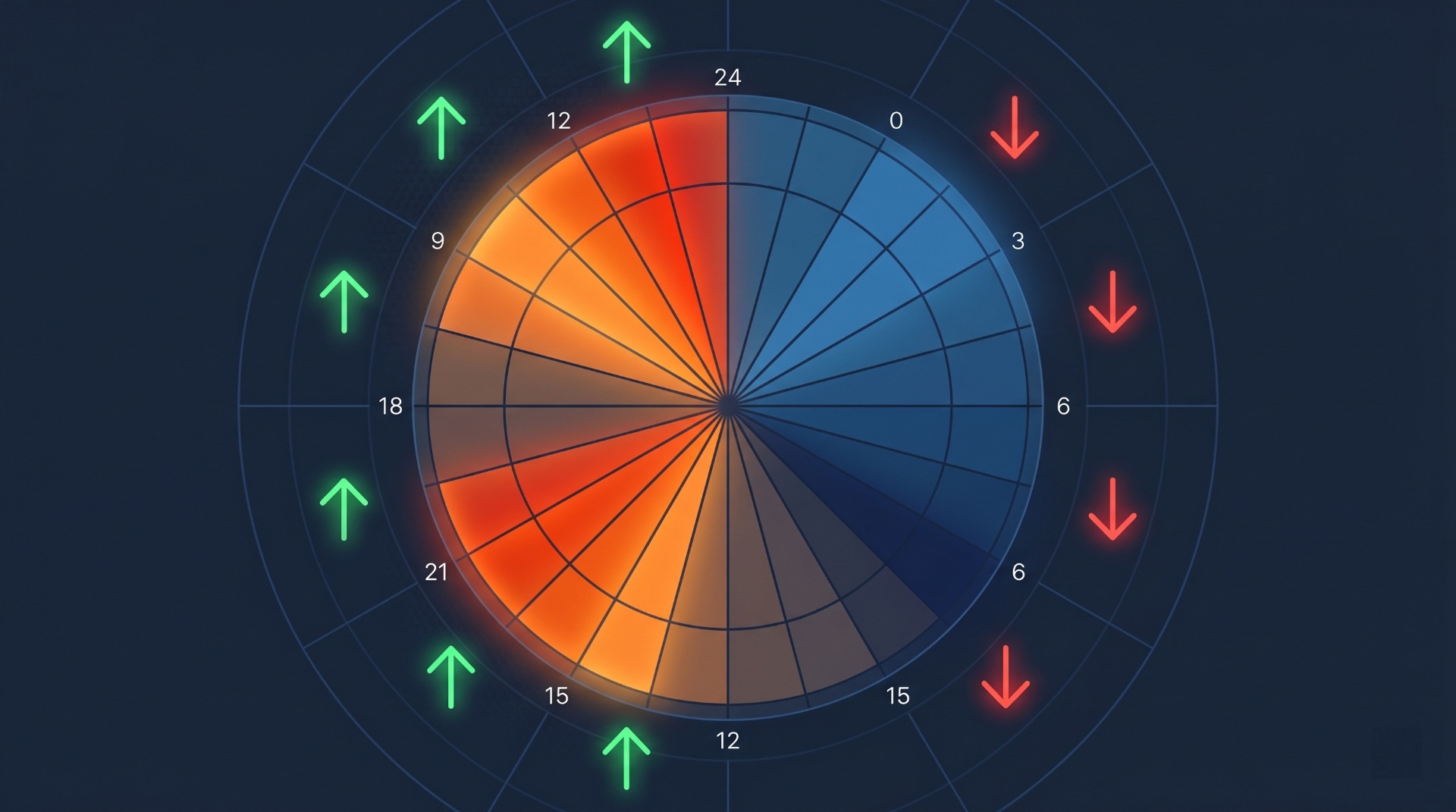
Your Amazon campaigns run 24 hours a day — but your customers don't buy 24 hours a day. Between 1 AM and 6 AM, most sellers pay the same CPC as during prime time, even though conversion rates are a fraction of peak hours. Dayparting solves exactly this problem: you adjust bids by hour and weekday to direct budget where it actually converts. This deep-dive shows you how dayparting works, what data you need, and how to automate it in 2026.
What is dayparting and why does it matter in 2026?
Dayparting (also called "ad scheduling" or "time-of-day optimization") is the practice of adjusting ad bids or budgets based on the time of day and day of the week. The goal: invest more budget during hours with high conversion probability, less during times with low ROAS.
Why is this more relevant than ever in 2026? Because average CPCs on Amazon have risen to $1.18 (source: Ad Badger, 2026). At this price level, inefficient clicks during the night and early morning add up to hundreds of dollars per month — per campaign. At the same time, consumer buying behavior has shifted: mobile shopping pushes peaks into evening hours, while desktop purchases happen during the day.
The combination of rising CPCs and clearly identifiable buying windows makes dayparting one of the most effective levers to lower ACoS without losing reach.
The problem: 30% of your budget evaporates at night
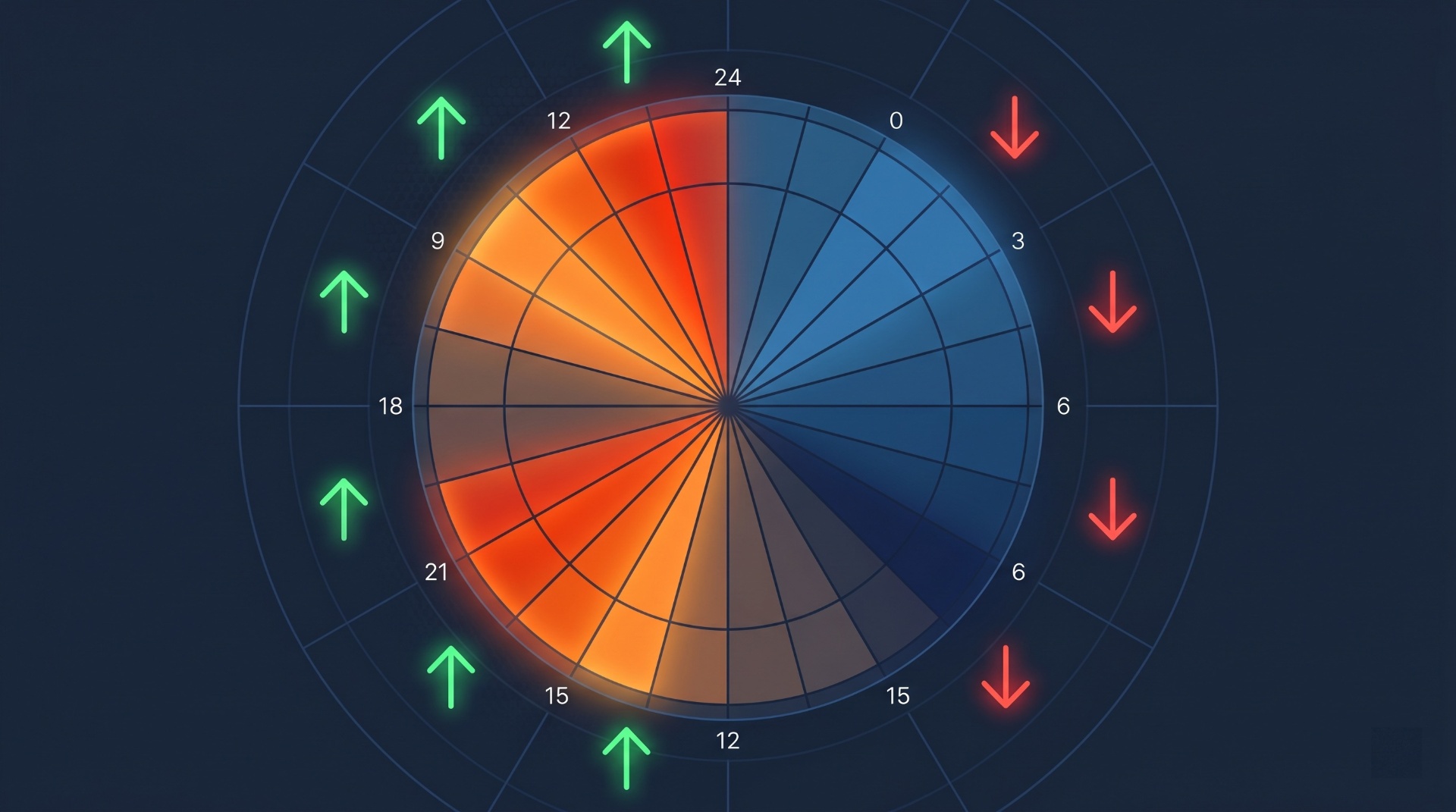
Most Amazon campaigns run with a fixed daily budget and constant bids — 24/7. But performance varies massively throughout the day:
- 1 AM–6 AM: Conversion rates drop to 2–4% (vs. 10–15% during peak hours). CPCs remain at similar levels because other sellers aren't optimizing either.
- 6 AM–9 AM: Click volume rises, but many clicks are "browse clicks" without buying intent. CR sits at 5–7%.
- 6 PM–10 PM: The golden hours. CR reaches 12–18% — two to three times higher than at night.
Example: A seller spends $100/day on PPC. $25 is spent between midnight and 6 AM at a 3% CR. The same amount invested at 8 PM would have generated five times more orders at 15% CR. Over a month, that's $750 of wasted budget — or 15 additional orders that never happened.
What data you need — and where to find it
To implement dayparting based on data, you need hourly performance data. Amazon doesn't provide this directly in the Advertising Console, but there are several ways to get it:
1. Amazon Advertising API (Reporting v3)
The API delivers reports with hourly granularity for Sponsored Products, Sponsored Brands, and Sponsored Display. You can retrieve impressions, clicks, spend, and orders per hour.
2. Amazon Brand Analytics — Search Term Report
The search term report doesn't show hourly data, but you can identify weekly patterns and cross-reference them with API data.
3. Order timestamps from Seller Central
The Order Report contains the exact order timestamp. Export the last 90 days and group orders by hour. This shows you when your customers actually buy — independent of ad clicks.
Tip: Combine all three data sources. The API shows when you pay for clicks. The Order Report shows when customers buy. The gap between both patterns is your optimization potential.
Hourly performance analysis
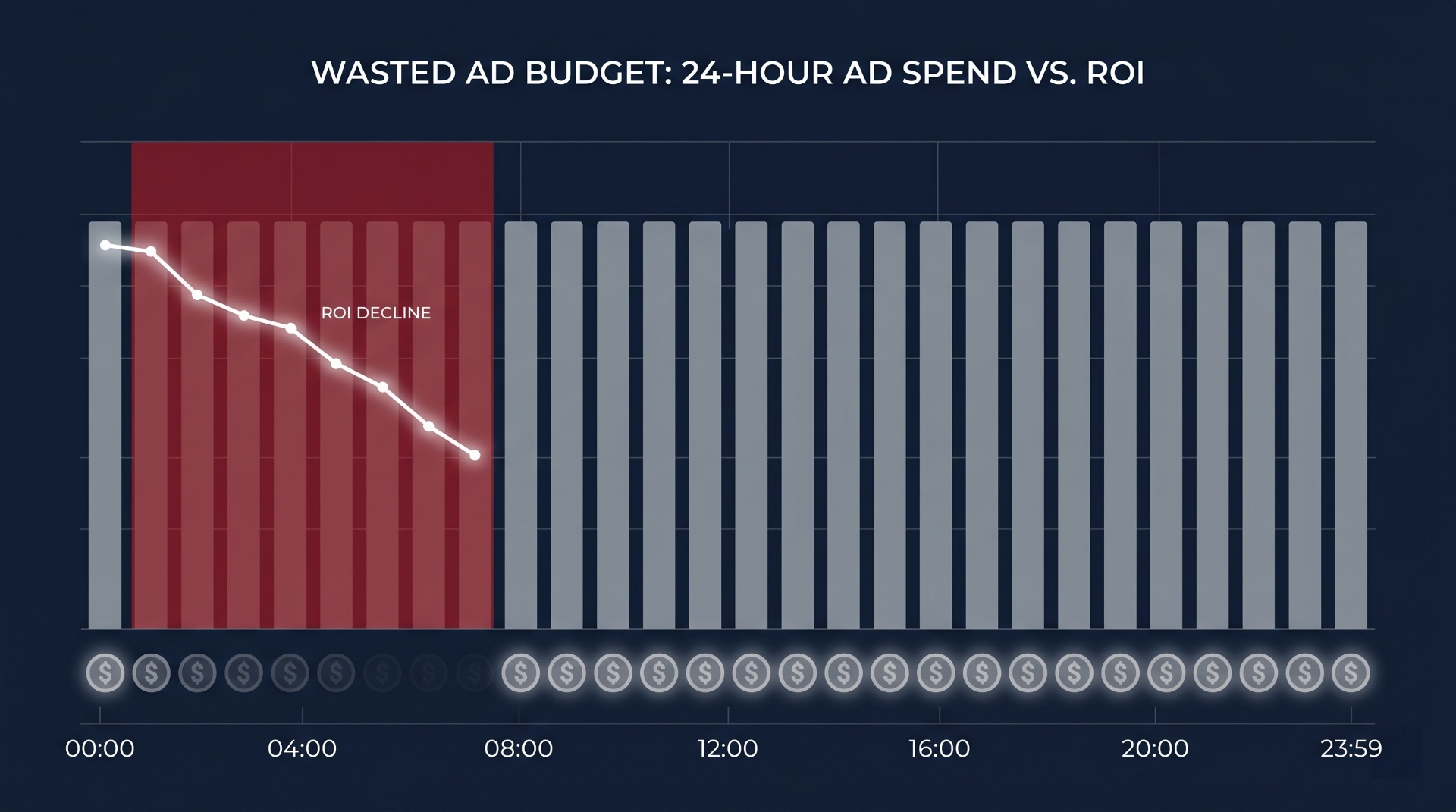
Once you have hourly data, create a heatmap with ACoS per hour. The process:
- Export data: Download the hourly performance report for the last 30–60 days. At least 30 days so weekend patterns become visible.
- Aggregate: Calculate average ACoS, CPC, CR, and ROAS for each hour (0–23).
- Classify: Divide the 24 hours into three groups:
- 🟢 Prime hours (ACoS < target ACoS): Increase bids by 10–30%.
- 🟡 Neutral hours (ACoS ≈ target ACoS): Keep bids unchanged.
- 🔴 Weak hours (ACoS > 1.5× target ACoS): Reduce bids by 30–60%.
- Validate: Check that sample size per hour is sufficient. Fewer than 50 clicks per hour over 30 days is not statistically reliable.
Weekday strategy: Monday isn't Sunday
Limiting dayparting to hours only leaves potential on the table. Performance also varies significantly by day of the week:
| Weekday | Avg ACoS | Avg CR | Recommendation |
|---|---|---|---|
| Monday | 24% | 12.5% | Bids +15% |
| Tuesday | 23% | 13.1% | Bids +15% |
| Wednesday | 26% | 11.8% | Standard |
| Thursday | 27% | 11.2% | Standard |
| Friday | 29% | 10.5% | Bids −10% |
| Saturday | 31% | 9.8% | Bids −20% |
| Sunday | 28% | 10.9% | Bids −10% |
Note: These are industry averages for Consumer Electronics on Amazon DE. Your category may differ — which is why your own data analysis is essential.
The ideal dayparting strategy combines hourly and weekday profiles. A Monday at 8 PM is the most profitable slot, a Saturday at 3 AM the least profitable. The matrix has 168 cells (24 hours × 7 days) — nearly impossible to manage manually.
Implementing dayparting: 3 methods compared
Method 1: Manual budget rules (free)
Amazon has allowed budget rules in the Advertising Console since 2024. You can increase daily budgets at certain times. Limitation: you can only increase budgets, not decrease them. And you can only control budgets, not bids.
Best for: Sellers with 5–10 campaigns and simple patterns (e.g., "less at night, more in the evening").
Method 2: API-based scripts (technical)
With the Amazon Advertising API, you can programmatically adjust bids. You write a script that adjusts bids for all keywords hourly based on a schedule. Pros: full control. Cons: development effort, maintenance, no learning capability.
Best for: Agencies with in-house development teams and 50+ campaigns.
Method 3: AI-powered dayparting (recommended)
Modern PPC tools like MarketplAIce automate dayparting completely. The AI analyzes hourly performance data, detects patterns, and adjusts bids in real time — without manual rule setup.
Best for: Sellers and agencies who want maximum efficiency with minimum time investment.
AI-powered dayparting with MarketplAIce
MarketplAIce integrates dayparting as one of 15 dimensions in its predictive bid optimization. This means: time of day and weekday are not considered in isolation, but together with seasonality, competitor activity, inventory levels, BSR trends, and 11 other factors.
How it works
- Data collection: MarketplAIce aggregates hourly performance data via the Advertising API — automatically, for all campaigns simultaneously.
- Pattern recognition: The AI identifies individual time windows with high and low conversion probability for each product.
- Predictive adjustment: Instead of just reacting to past hourly data, the system forecasts expected performance for the next 5 days — including weekday and holiday effects.
- Automatic bid execution: Bids are adjusted in real time — per keyword, per hour, per weekday. No manual intervention needed.
The difference from static dayparting: Static schedules treat every Monday the same. Predictive AI recognizes that a Monday after a holiday weekend has different conversion patterns than a regular Monday — and adjusts bids accordingly.
Case study: ACoS from 32% to 19% in 4 weeks
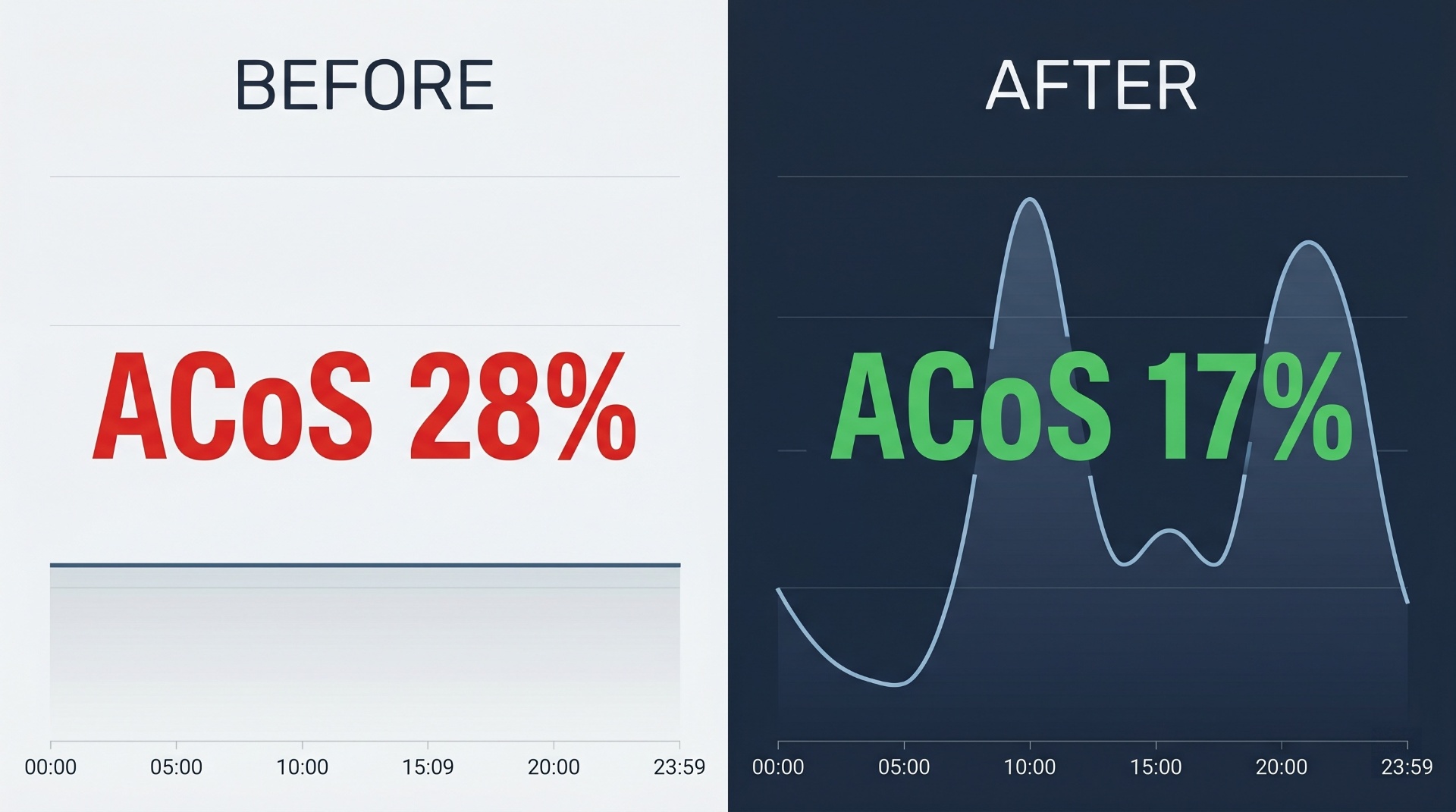
A Home & Kitchen seller on Amazon DE with monthly ad spend of €8,500 had a persistent problem: ACoS sat at 32% despite optimized keywords and listings.
The diagnosis
Hourly analysis showed: 28% of the budget was spent between midnight and 7 AM — at a CR of just 3.2%. Meanwhile, the budget was regularly exhausted during evening hours (6 PM–10 PM), where CR was 14.5%.
The action
MarketplAIce implemented a dynamic dayparting profile: bids were reduced by 50% at night and increased by 20% during evening hours. Additionally, the AI recognized that Tuesday and Wednesday were the strongest weekdays and shifted budget accordingly.
Results after 4 weeks
5 common dayparting mistakes — and how to avoid them
- Pausing campaigns entirely instead of lowering bids. When you pause and reactivate a campaign, Amazon loses its learning progress. Better: reduce bids to the minimum (e.g., $0.10) but keep the campaign active.
- Too little data as a foundation. At least 30 days of hourly data with 50+ clicks per hour are needed to identify statistically reliable patterns. Anything less is noise.
- Treating all products the same. A premium product with a high cart value has different buying windows than an impulse purchase under $15. Create product-specific time profiles.
- Ignoring seasonal shifts. In winter, peaks shift earlier (darker earlier = earlier online shopping). In summer, customers shop later into the evening. Update your dayparting profile at least quarterly.
- Treating dayparting in isolation. Time of day is just one factor. If your listing converts poorly, even perfect dayparting won't help. Combine dayparting with listing optimization and keyword harvesting.
Automate dayparting today
Manual dayparting works for 5 campaigns. For 50 or 500 campaigns, you need automation. MarketplAIce analyzes hourly performance for all your campaigns simultaneously and adjusts bids predictively — including weekday and seasonality effects.
FAQ — Common Questions About Amazon Dayparting
What is dayparting in Amazon PPC?
Dayparting is the practice of adjusting bids or budgets by hour of the day. The goal is to concentrate ad spend during high-conversion hours and reduce it during low-performance times.
Does Amazon offer native dayparting?
No, Amazon does not offer native dayparting in the Advertising Console. You can use budget rules to change daily budgets at certain times, but hourly bid adjustments require external tools or API access.
What time of day converts best on Amazon?
The highest conversion rates typically occur between 6 PM and 10 PM. Monday and Tuesday are the strongest weekdays. The weakest hours are 1 AM–6 AM.
How much ACoS reduction can dayparting deliver?
When implemented correctly, dayparting can reduce ACoS by 5–18%. The impact depends on product category, competitive landscape, and existing campaign structure.
Should I pause campaigns at night?
Fully pausing is risky because Amazon needs to recalibrate the campaign after reactivation. Better approach: reduce bids by 40–60% instead of pausing.
Does dayparting work on weekends?
Yes. On Saturdays and Sundays, buying behavior shifts: conversion peaks occur later (from 10 AM instead of 8 AM) and extend into late evening. Weekend-specific bid profiles can further improve ROAS.
About the author
Jorginho Engelmeyer
Founder of MarketplAIce with 8+ years of experience in Amazon Advertising.
Learn more →Last updated: April 2026