
Amazon Inventory Management With AI 2026 — 7 Steps to a Clean FBA Inventory
Out-of-Stock kills rankings, overstock eats margin. Here is how to solve inventory management 2026 with AI — 7 steps, example calculation, automation.

Contents
- Why inventory management matters more in 2026 than ever
- The real cost of out-of-stock and overstock
- The IPI problem: why Amazon throttles you
- Manual forecasting vs. AI forecasting
- The 7-step strategy for clean Amazon inventory
- Example calculation: Out-of-stock costs you 42% of revenue
- What you can do today
- FAQ — Common questions about Amazon inventory management
1. Why inventory management matters more in 2026 than ever
Every Amazon seller knows the moment: you see "Currently Unavailable" in Seller Central — and know that your ranking is crashing in real time. At the same time other SKUs are piling up in the FBA warehouse and eating storage fees while they barely sell. Welcome to the 2026 inventory dilemma.
Three developments in 2026 have increased the pressure on inventory management massively:
1. FBA fees up. FBA storage fees rose on average 9% in 2026, Long-Term Storage fees now kick in at 181 days (previously 365).
2. IPI thresholds tighter. The Inventory Performance Index (IPI) must be at least 450 for Amazon not to set storage limits on your seller account.
3. Volatility through events. Prime Day, Black Friday, Cyber Week, Back-to-School — sales peaks swing between 200% and 800% above average. Anyone planning only with monthly averages runs into empty warehouses.
The good news: the 2026 Amazon seller does not need a $50,000 ERP. They need clean forecasts, automated reorder points, and an AI that prices in events.
2. The real cost of out-of-stock and overstock
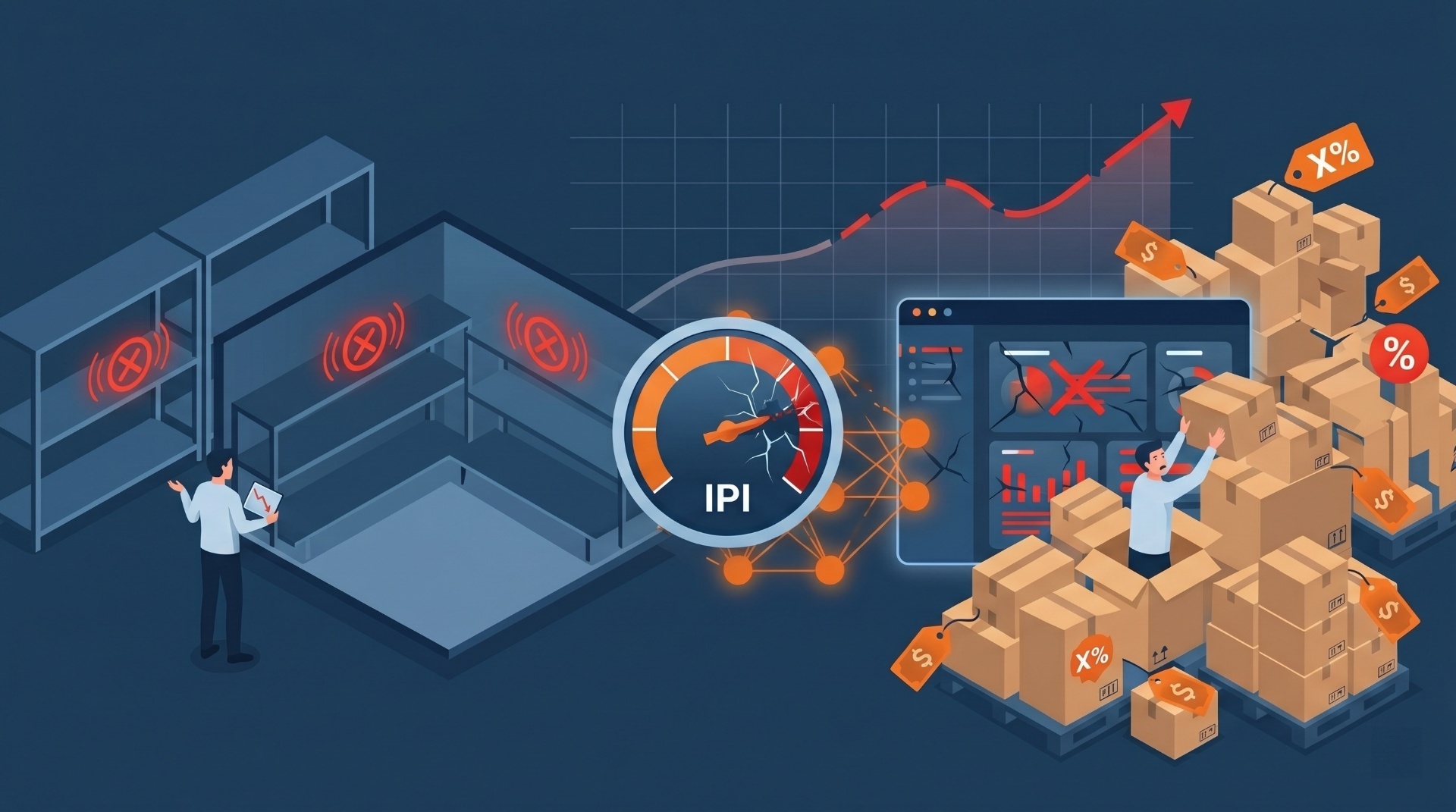
Many sellers underestimate what inventory problems really cost. Do the math:
Out-of-stock costs more than just missed sales:
- Ranking loss: your keyword position drops within 7–14 days — recovery takes weeks
- Buy Box loss: Amazon rotates you out of the Buy Box as soon as stock falls below 7 days of coverage
- PPC killer: your ads get auto-paused → you lose collected keyword learnings
- Competitor boost: competitors win your lost clicks and build a review lead
Overstock ties up cash and eats margin:
- FBA monthly storage: $0.87/ft³ Jan–Sep, $2.40/ft³ Oct–Dec
- Long-Term Storage after 181 days: $6.90/ft³ additional
- Tied-up working capital: often 20–40% of your total cash flow
- Deteriorated IPI → Amazon limits on replenishment
The balance between these two extremes is the core of inventory management. Too little stock and you lose revenue. Too much stock and you lose margin. Most sellers sit on both problems at the same time — on different SKUs.
💡 Tip: Check your IPI first (Seller Central → Inventory → Inventory Performance). Below 450 Amazon sets storage limits — you become incapable of action in Q4.
3. The IPI problem: why Amazon throttles you
The Inventory Performance Index (IPI) is Amazon's internal rating system for seller inventory. It evaluates four factors:
- Excess Inventory Percentage — share of overstock
- Sell-Through Rate — how quickly your stock sells
- Stranded Inventory — products that can't be sold (missing listings etc.)
- In-Stock Rate — how often your SKUs are available
Below an IPI of 450 Amazon sets "Storage Limits" on your account — you can't send in more units than your limits allow. In competitive Q4 quarters that means: you can't stock up, even if you need to.
IPI killers in practice:
- Seasonal items not reduced after the season (Christmas decor in February)
- Slow-moving SKUs not weeded out
- Listing errors lead to stranded inventory
- Forecast too aggressive → massive overstock after campaign flops
4. Manual forecasting vs. AI forecasting
Manual forecasting (Excel + gut feeling): You look at the average of the last 30 days, multiply by the planned lead time and hope for the best. Problem: averages ignore seasonality, events, PPC swings and market changes.
Rule-based forecasting (simple tools): "If below 30 days of coverage → order." Works with stable products. Fails with events, seasonality or sudden PPC spikes.
AI forecasting (modern solutions like MarketplAIce): The AI analyzes simultaneously:
- Historical sales data SKU-level over multiple years
- Seasonality and events (Prime Day, Christmas, Back-to-School)
- PPC campaign calendar (planned spend peaks)
- Listing performance trends (conversion rate development)
- Marketplace-specific patterns (DE vs. UK vs. US)
- Lead times (production + transport + FBA check-in)
- Safety stock parameters based on variance
The difference in numbers: in a typical client setup AI forecasting reduces the out-of-stock rate by 60–80% while at the same time average inventory drops by 15–25%.
⚠️ Warning: Rule-based forecasters without event sensitivity run into out-of-stock twice per year (Prime Day + Q4). Without an event calendar any automation is only half automated.
5. The 7-step strategy for clean Amazon inventory

If you want to systematically get inventory under control in 2026, work through these seven steps in order:
Step 1 — ABC analysis of your catalog
Sort your SKUs by revenue: A-SKUs (80% of revenue), B-SKUs (15%), C-SKUs (5%). Optimize A-SKUs first — for C-SKUs "sell out and don't reorder" is often enough.
Step 2 — Measure lead time exactly
How many days pass between order and "FBA active"? Including production, transport, check-in. This value is the most important input for any forecast.
Step 3 — Calculate safety stock
Formula: (avg sales per day × lead time) × 1.3 as buffer. For A-SKUs with high variance: 1.5. For stable C-SKUs: 1.1.
Step 4 — Set reorder point
At what stock level do you reorder? Formula: (sales per day × lead time) + safety stock. If your stock falls below → order, don't wait.
Step 5 — Build in event sensitivity
Prime Day coming? Then +40% on the reorder point 45 days in advance. Christmas? +120% on demand between November and mid-December.
Step 6 — Actively reduce overstock
SKUs with > 90 days of stock: promotions, multi-pack bundles, external liquidation channels.
Step 7 — Automate
Schedule weekly inventory reviews on the calendar. Or: an AI agent takes over reorder triggers, event calculation and IPI monitoring automatically. With more than 50 SKUs nobody can run this cleanly by hand anymore.
Anyone who consistently implements these 7 steps typically keeps their IPI above 600, reduces out-of-stock rate to under 2% and lowers average tied-up capital by 20%.
6. Example calculation: Out-of-stock costs you 42% of revenue
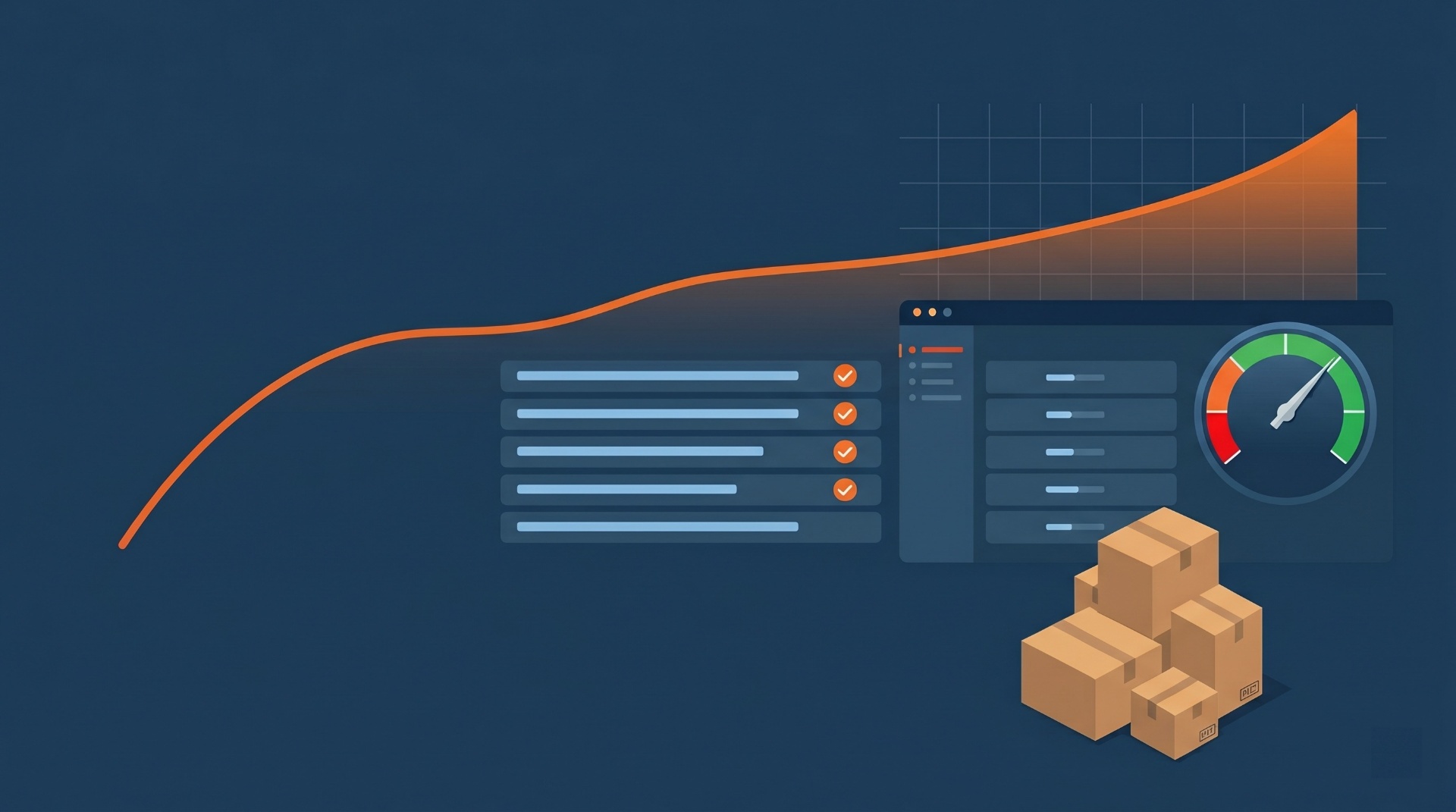
A typical Amazon seller we onboard at MarketplAIce:
Starting point:
- Revenue per month: $120,000
- 40 active SKUs
- Average out-of-stock days per SKU: 6 per month
- IPI: 420 (Amazon limits set)
Losses from out-of-stock:
- 40 SKUs × 6 days = 240 OOS days per month (total)
- Per OOS day on average: $150 lost revenue
- Directly lost revenue: $36,000/month
- Ranking loss effect (next 4 weeks): additional ~$8,000/month
- Total revenue loss: ~36% to 42%
After optimization (AI forecasting, 3 months runtime):
| Metric | Before | After |
|---|---|---|
| Out-of-stock days per SKU/month | 6 | 0.8 |
| IPI | 420 | 610 |
| Recovered revenue | — | +$40,000/month |
| Inventory reduction | — | -22% |
| Freed working capital | — | ~$48,000 |
The ROI of inventory optimization is in most cases visible faster than with PPC optimization — because you directly recover revenue you currently simply aren't making.
Inventory Agent automated — across 15 dimensions
MarketplAIce handles forecasting, reorder triggers and IPI monitoring. Part of the Pro plan ($999/month, $799/month billed annually).
Start 14-day free trial →7. What you can do today
Three concrete steps for today:
- Check IPI score. Open Seller Central → Inventory → Inventory Performance. Below 450 is critical, below 500 suboptimal.
- Calculate reorder points for top-10 SKUs. Use the formula above, set reorder points in your backend. If below: order immediately.
- Resolve stranded inventory. Seller Central → Manage Inventory → Stranded Inventory. Handle anything stranded immediately — costs storage space without sales.
Want this fully automated? The Inventory Agent from MarketplAIce takes over AI forecasting, event adjustment, reorder triggers and IPI monitoring. Part of the Pro plan ($999/month, $799/month billed annually).
Agency with multiple Amazon clients? Our Partner Program lets you offer inventory optimization as an add-on service per client — white-label from Silver tier, up to 35% MRR commission.
Go deeper: Want to start with FBA fees? Read Amazon FBA Fuel Surcharge 2026. Out-of-stock hits your Buy Box directly — strategy here: Win the Amazon Buy Box 2026. For the AI dimensions behind forecasting + bidding: Predictive Bid Optimization — 15 Dimensions.
Ready for clean inventory management?
Test MarketplAIce 14 days free — the Inventory Agent shows you in 14 days which SKUs to reorder and which to liquidate.
Start free →For sellers
Start with the IPI check + reorder points for your top-10 A-SKUs. In 30 minutes you have an action plan for the next 14 days.
See pricing →For agencies
Scale inventory optimization across all client accounts — white-label from Silver tier, up to 35% MRR commission.
To the partner program →8. FAQ — Common questions about Amazon inventory management
Jorginho Engelmeyer
Founder & CEO at MarketplAIce. Over 8 years of Amazon Advertising for brands and agencies in DE, UK and US. Specialist for predictive bid and inventory optimization with AI.
More about Jorginho →More deep guides on Amazon growth